25 September 2026
Kombucha Drink Processing: Fermentation, Flavouring & Packaging
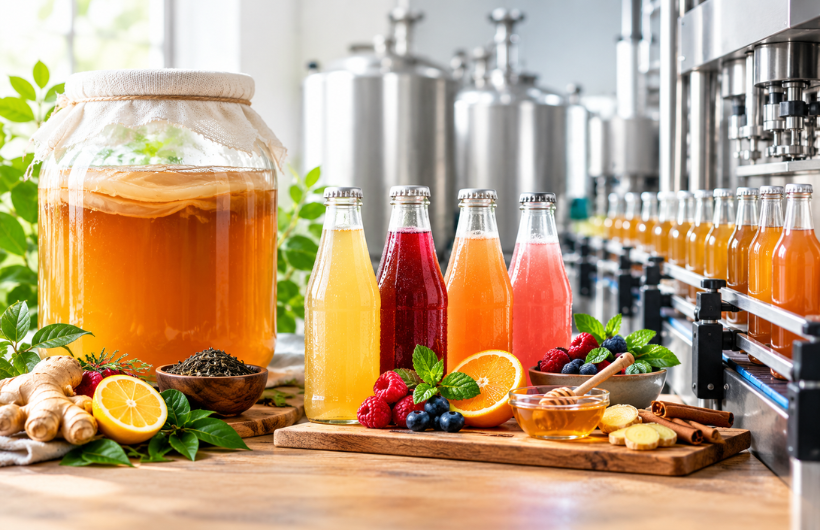
Kombucha is a fermented tea-based beverage produced by combining brewed tea, sugar and a symbiotic culture of bacteria and yeast, commonly known as SCOBY. A kombucha drink is developed through controlled fermentation, where the tea base undergoes biological transformation to create its characteristic tart, mildly sweet and naturally effervescent profile. As interest in Fermented tea and Fermented Tea products continues to grow, manufacturers require a controlled process to achieve consistency across every production batch.
A Fermented tea drink combines the traditional characteristics of brewed tea with the distinctive profile developed through fermentation. A kombucha beverage therefore requires suitable equipment and controlled processing stages to maintain consistency, hygiene and product quality throughout production.
Understanding the Kombucha Processing Process
Commercial production begins with the preparation of sweetened tea, which provides the base for fermentation. Once the tea has been prepared and brought to suitable processing conditions, it is transferred to a Fermentation Tank.
1. Fermentation Tank
The Fermentation Tank is the core processing vessel in kombucha production. The prepared tea and fermentation culture are introduced into the tank, where controlled fermentation takes place.
During fermentation, yeast converts available sugars into alcohol and carbon dioxide, while bacteria contribute to the formation of organic acids. The duration and conditions of fermentation influence the final taste, acidity and overall beverage characteristics.
A suitable fermentation tank allows manufacturers to maintain controlled processing conditions while providing hygienic handling of the product. Tank construction, agitation requirements, temperature management and transfer arrangements can be selected according to the production process and capacity.
2. Flavour Mixing Tank
After fermentation, the base is transferred for flavour development. The Flavour Mixing Tank enables the incorporation and uniform blending of ingredients such as fruit preparations, botanical extracts or other permitted flavouring components.
Controlled mixing helps achieve consistent distribution throughout the batch while maintaining the desired product profile. Depending on the formulation and process requirements, the tank can be configured for effective ingredient incorporation and hygienic product handling.
This stage gives manufacturers flexibility to develop multiple flavour variants from the same fermented tea base.
3. Filling & Packaging System
Once the fermented and flavoured product is ready, it moves to the Filling & Packaging System. The system fills the finished product into the selected packaging format while supporting controlled product handling during the final stage.
Packaging plays an important role in preserving the product's intended characteristics and ensuring efficient distribution. Depending on the product format and production requirements, bottles, cans or other suitable containers can be incorporated into the packaging line.
Building a Consistent Kombucha Production Line
A well-planned process connects fermentation, flavouring and packaging into a coordinated production flow. The fermented base can be developed into a range of products, allowing manufacturers to respond to changing consumer preferences and flavour trends.
From controlled fermentation to uniform flavour incorporation and efficient filling, each stage contributes to the final product quality.
For manufacturers planning commercial production, selecting equipment according to batch size, process requirements, product formulation and packaging format is essential. A properly integrated processing line can support repeatable production while maintaining hygienic handling throughout the process.
Kombucha production therefore combines traditional fermentation principles with a structured processing approach. With the right combination of Fermentation Tank, Flavour Mixing Tank and Filling & Packaging System, manufacturers can establish a scalable process for producing a consistent product.
Kombucha is a fermented tea-based beverage produced by combining brewed tea, sugar and a symbiotic culture of bacteria and yeast, commonly known as SCOBY. A kombucha drink is developed through controlled fermentation, where the tea base undergoes biological transformation to create its characteristic tart, mildly sweet and naturally effervescent profile. As interest in Fermented tea and Fermented Tea products continues to grow, manufacturers require a controlled process to achieve consistency across every production batch.
A Fermented tea drink combines the traditional characteristics of brewed tea with the distinctive profile developed through fermentation. A kombucha beverage therefore requires suitable equipment and controlled processing stages to maintain consistency, hygiene and product quality throughout production.
Understanding the Kombucha Processing Process
Commercial production begins with the preparation of sweetened tea, which provides the base for fermentation. Once the tea has been prepared and brought to suitable processing conditions, it is transferred to a Fermentation Tank.
1. Fermentation Tank
The Fermentation Tank is the core processing vessel in kombucha production. The prepared tea and fermentation culture are introduced into the tank, where controlled fermentation takes place.
During fermentation, yeast converts available sugars into alcohol and carbon dioxide, while bacteria contribute to the formation of organic acids. The duration and conditions of fermentation influence the final taste, acidity and overall beverage characteristics.
A suitable fermentation tank allows manufacturers to maintain controlled processing conditions while providing hygienic handling of the product. Tank construction, agitation requirements, temperature management and transfer arrangements can be selected according to the production process and capacity.
2. Flavour Mixing Tank
After fermentation, the base is transferred for flavour development. The Flavour Mixing Tank enables the incorporation and uniform blending of ingredients such as fruit preparations, botanical extracts or other permitted flavouring components.
Controlled mixing helps achieve consistent distribution throughout the batch while maintaining the desired product profile. Depending on the formulation and process requirements, the tank can be configured for effective ingredient incorporation and hygienic product handling.
This stage gives manufacturers flexibility to develop multiple flavour variants from the same fermented tea base.
3. Filling & Packaging System
Once the fermented and flavoured product is ready, it moves to the Filling & Packaging System. The system fills the finished product into the selected packaging format while supporting controlled product handling during the final stage.
Packaging plays an important role in preserving the product's intended characteristics and ensuring efficient distribution. Depending on the product format and production requirements, bottles, cans or other suitable containers can be incorporated into the packaging line.
Building a Consistent Kombucha Production Line
A well-planned process connects fermentation, flavouring and packaging into a coordinated production flow. The fermented base can be developed into a range of products, allowing manufacturers to respond to changing consumer preferences and flavour trends.
From controlled fermentation to uniform flavour incorporation and efficient filling, each stage contributes to the final product quality.
For manufacturers planning commercial production, selecting equipment according to batch size, process requirements, product formulation and packaging format is essential. A properly integrated processing line can support repeatable production while maintaining hygienic handling throughout the process.
Kombucha production therefore combines traditional fermentation principles with a structured processing approach. With the right combination of Fermentation Tank, Flavour Mixing Tank and Filling & Packaging System, manufacturers can establish a scalable process for producing a consistent product.