25 July 2026
The Growing Demand for High-Pressure Pumps in Renewable Energy Projects
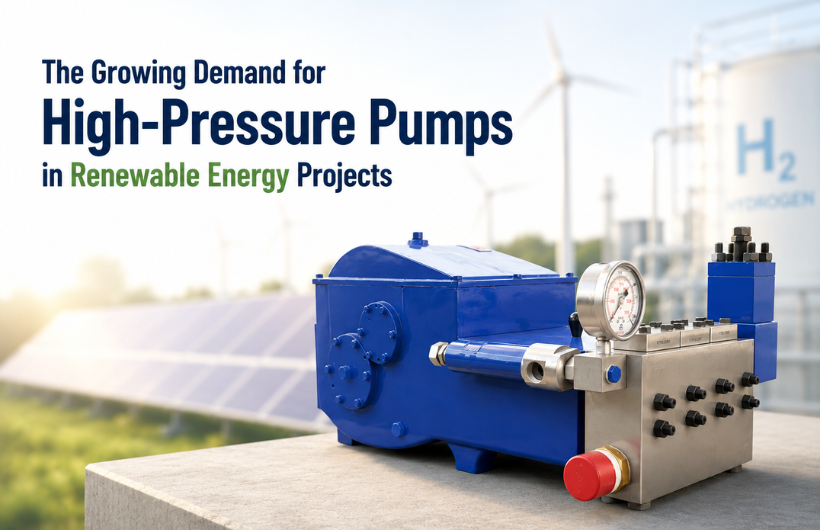
The global transition toward renewable energy is reshaping not only the way electricity is generated but also the technologies that support these systems. While solar panels and wind turbines often dominate discussions around clean energy, several renewable energy processes rely on sophisticated fluid handling systems operating under extreme pressures.
Renewable energy projects are designed for long operating lifecycles, often exceeding 25 to 40 years. To achieve this, every mechanical component must withstand demanding operating conditions while maintaining consistent performance.
Geothermal Energy: One of the Fastest Growing Applications
Geothermal power represents one of the most demanding applications for high-pressure pumping systems.
Geothermal plants generate electricity by extracting heat stored deep beneath the Earth's surface. Production wells bring hot geothermal fluids to the surface, where steam drives turbines connected to electrical generators. After the thermal energy has been extracted, the remaining geothermal brine must be returned to the underground reservoir.
This reinjection process is essential for maintaining reservoir pressure, preserving long-term production capacity, and meeting environmental regulations. Without reinjection, geothermal reservoirs gradually lose pressure, reducing energy output and shortening the operational life of the plant.
Why Reinjection Pumps Are Critical
The reinjection system forces spent geothermal brine back into deep underground formations against extremely high reservoir pressures.
Typical operating conditions include:
- Injection pressures ranging from 80 to over 350 bar
- Continuous operation throughout the plant lifecycle
- Hot fluids between 80°C and 160°C
- Highly corrosive geothermal brine containing chlorides, dissolved silica, and hydrogen sulphide
These operating conditions create one of the most demanding pump duties found in any renewable energy project.
Why High-Pressure Reciprocating Plunger Pumps Are Preferred
Although multistage centrifugal pumps are widely used in many industrial applications, geothermal reinjection presents a fundamentally different challenge.
Geothermal reservoirs require relatively low but highly controlled flow rates. Injection volumes often vary significantly as reservoir engineers optimise production, monitor temperature changes, and manage reservoir pressure.
High-pressure reciprocating plunger pumps offer several advantages for these operating conditions:
Precise Flow Control
Flow rate can be adjusted accurately using Variable Frequency Drives (VFDs) while maintaining consistent discharge pressure.
High Pressure Capability
Reciprocating plunger pumps are specifically designed to generate very high pressures efficiently without sacrificing performance at lower flow rates.
Excellent Turndown Ratio
These pumps maintain stable operation across a wide operating range, allowing plants to adapt injection rates without compromising efficiency.
Superior Volumetric Efficiency
Unlike centrifugal pumps, reciprocating pumps maintain high efficiency regardless of operating pressure, making them well suited for variable reservoir conditions.
Materials Matter in Renewable Energy Applications
Selecting the correct pump technology is only part of the solution. Material selection is equally important.
Geothermal fluids are chemically aggressive and can rapidly damage conventional materials.
Common challenges include:
- Chloride-induced corrosion
- Silica scale formation
- Hydrogen sulphide attack
- Elevated operating temperatures
To withstand these conditions, engineered pump fluid ends are often manufactured using Duplex or Super Duplex stainless steels, offering significantly higher resistance to corrosion and stress cracking compared to conventional stainless-steel grades.
Sealing systems, valves, plungers, and packing materials must also be selected specifically for high-temperature and corrosive service to ensure long-term operational reliability.
Green Hydrogen Production
Hydrogen production through electrolysis requires high-pressure water supply systems and hydrogen compression processes that depend on precision pumping technologies.
Carbon Capture and Storage (CCS)
Emerging carbon capture projects use high-pressure injection systems to transport captured carbon dioxide into deep geological formations, requiring reliable pumping systems capable of operating under demanding pressure conditions.
The Future of High-Pressure Pumps in Renewable Energy
Global investments in renewable energy continue to accelerate, driving demand for engineered pumping solutions capable of handling increasingly demanding applications. Whether supporting geothermal reservoir reinjection, hydrogen production, or emerging carbon capture technologies, high-pressure pumps have become essential infrastructure for the clean energy sector.