04 September 2026
What Happens When Suction Conditions Are Ignored in a High-Pressure Application?
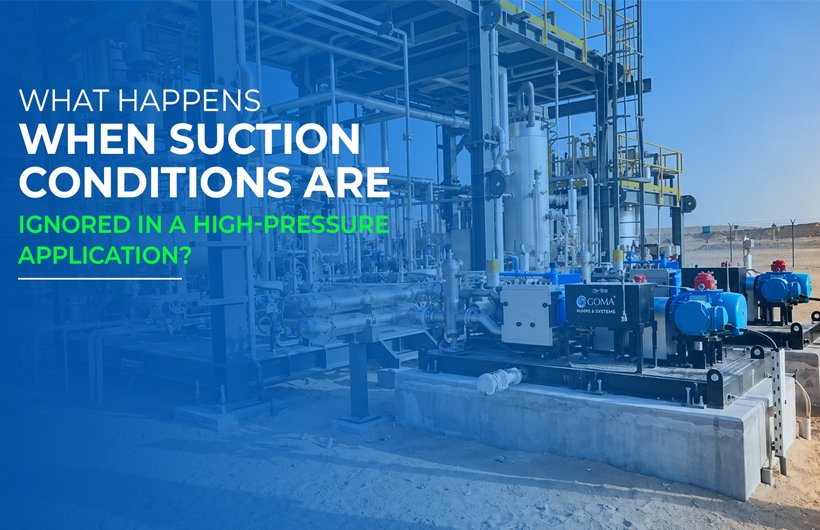
In a high-pressure pumping system, attention often focuses on discharge pressure, flow rate and pump performance. However, the suction side is equally critical. A high-pressure pump can only perform reliably when it receives the right amount of fluid under suitable suction conditions. Ignoring these conditions can lead to unstable operation, premature wear and unexpected downtime.
Why Suction Conditions Matter
The suction side determines how effectively fluid reaches the pump before compression begins. If the available suction pressure is inadequate, the pump may struggle to maintain a consistent flow. Restrictions in the suction line, undersized piping, excessive bends, poor tank arrangement or insufficient liquid level can further increase the risk.
For high-pressure reciprocating pumps, these conditions become particularly important because the pump operates through repeated suction and discharge cycles. Any limitation during the suction stroke can affect the pump's ability to fill correctly.
What Happens When Suction Is Inadequate?
1. Cavitation Risk Increases
When pressure at the pump suction falls below the fluid's vapour pressure, vapour pockets can form and collapse as pressure changes. This can create noise, vibration and damaging hydraulic shocks within the pump.
2. Flow Becomes Unstable
Poor suction conditions can prevent proper filling of the pumping chamber. The result may be inconsistent flow, pressure fluctuations and reduced system performance.
3. Pump Components Experience Higher Stress and Damage
Valve assemblies, plungers, diaphragms, seals and other wetted components can experience abnormal operating conditions when the pump is starved of fluid. Repeated operation under such conditions can accelerate component wear.
4. Pump Performance Drops
A pump may be capable of delivering high pressure on paper, but inadequate suction conditions can prevent it from achieving the expected flow and pressure consistently. Increasing discharge pressure alone cannot compensate for a poorly designed suction system.
Designing the Suction Side Correctly
Reliable high-pressure pumping begins before the fluid reaches the pump. Suction piping should be designed to minimise unnecessary pressure losses and restrictions. Proper pipe sizing, smooth routing, suitable valves and strainers, adequate liquid level and appropriate suction conditions should all be considered during system design. Considering the NPSH along with suction dampener and acceleration head loss. Proper Line size and suction dampeners for low RPM and the valve design if the pressure is still low. The design should have less stiffness, and the valve should be specially designed.
For critical applications, analysing the complete suction arrangement not just the pump itself is essential.
The GOMA Approach
At GOMA, high-pressure pumping systems are engineered with attention to the complete operating environment. The objective is not simply to achieve high discharge pressure, but to ensure dependable pump operation, stable performance and long-term system reliability. In high-pressure applications, the pump can only perform as well as the suction system allows.