31 July 2026
Shelf-Life Extension in Non-Alcoholic Beverages: Processing Techniques That Actually Work
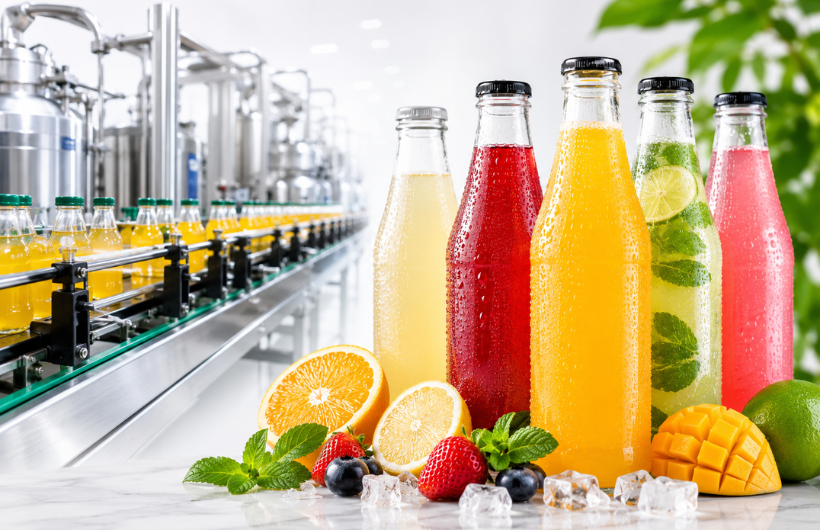
In today's competitive beverage industry, shelf life is more than just a quality parameter it directly impacts distribution, profitability, product consistency, and consumer trust. For non-alcoholic beverages manufacturers need products that retain their taste, appearance, nutritional value, and safety throughout their intended shelf life. While preservatives can play a role, the most effective shelf-life extension begins with the right processing technologies.
Start with High-Quality Raw Material Handling
Shelf-life extension begins long before the beverage reaches the filler. Fresh ingredients must be handled under hygienic conditions to minimise microbial contamination from the start.
Efficient ingredient dosing, controlled mixing, filtration, and closed-process transfer systems reduce the chances of contamination while ensuring batch-to-batch consistency. Proper process control at this stage also helps preserve flavour, colour, and nutritional properties throughout production.
Thermal Processing Eliminates Microbial Risks
One of the most effective methods for extending shelf life is thermal processing. Controlled heating destroys harmful microorganisms while reducing enzyme activity that can otherwise lead to flavour degradation, colour changes, and spoilage.
The processing method depends on the beverage type and desired shelf life.
Pasteurization is suitable for chilled beverages requiring refrigerated storage, while UHT (Ultra High Temperature) Sterilization enables significantly longer shelf life for products intended for ambient storage when combined with suitable packaging.
Modern thermal processing systems ensure accurate temperature control and holding times, delivering food safety without excessive heat exposure that could affect product quality.
Homogenization Improves Product Stability
Many beverages contain ingredients such as fats, proteins, flavour oils, pulp, or suspended particles. Without proper processing, these components tend to separate during storage, reducing product appeal.
High-pressure homogenization breaks particles into uniform sizes, creating a stable emulsion that improves:
- Product consistency
- Smooth mouthfeel
- Uniform appearance
- Reduced phase separation
- Better flavour distribution
Homogenization is especially important for dairy beverages, nutritional drinks, plant-based beverages, flavoured milk, protein drinks, and emulsified beverages.
Hygienic Processing Prevents Recontamination
Even after effective thermal treatment, beverages remain vulnerable to contamination if exposed during transfer or storage.
Closed processing systems minimise product contact with the external environment through hygienic piping, sanitary valves, automated controls, and stainless-steel equipment designed for food applications.
Maintaining hygienic conditions throughout production protects the product until it reaches the packaging stage.
Aseptic Filling Protects Product Integrity
The effectiveness of processing can be compromised if filling operations introduce contaminants.
Aseptic filling combines sterilised packaging materials with sterile filling environments to ensure the beverage remains microbiologically safe after processing. When integrated with UHT processing, aseptic filling allows many beverages to achieve extended ambient shelf life without refrigeration while preserving product quality.
This combination has become a preferred solution for manufacturers looking to expand distribution across wider geographic markets.
Consistent Cleaning Supports Longer Shelf Life
Equipment cleanliness directly influences product quality and shelf life. Residual product deposits can become breeding grounds for microorganisms, increasing contamination risks in subsequent production batches.
An automated Clean-In-Place (CIP) System ensures tanks, pipelines, heat exchangers, homogenizers, and processing equipment are cleaned and sanitised consistently without dismantling the system. Regular and validated CIP cycles improve hygiene, reduce downtime, and help maintain reliable production standards.
The Right Processing Plant Makes the Difference
Extending shelf life is not achieved through a single machine or process. It requires an integrated processing plant where every stage from ingredient handling and thermal processing to homogenization, hygienic transfer, filling, and cleaning works together to preserve beverage quality.
A well-designed beverage processing plant delivers more than longer shelf life. It improves product consistency, reduces wastage, enhances food safety, and supports manufacturers in supplying high-quality beverages to both local and international markets with confidence.


