21 August 2026
Seven Maintenance Practices That Increase the Life of Pumps
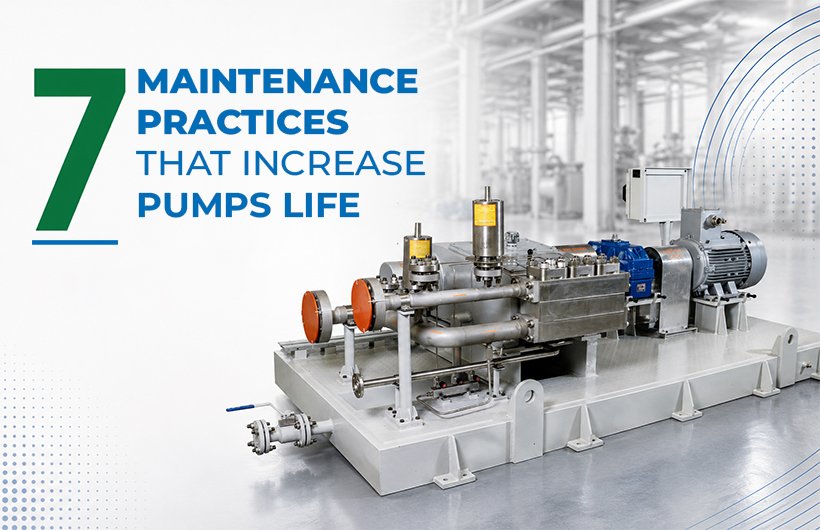
High-pressure reciprocating pumps are the backbone of critical industrial operations such as hydrostatic testing, high-pressure water jetting, descaling, reverse osmosis, chemical injection, surface preparation, and oil & gas processes. Unlike centrifugal pumps, these positive displacement pumps deliver a fixed volume of fluid with every stroke, making them the preferred choice where high pressure and precise flow are essential.
Operating at pressures that can exceed hundreds or even thousands of bar places significant cyclic loads on components such as the crankshaft, connecting rods, crossheads, plungers, valves, bearings, and packing assemblies. While these pumps are engineered for demanding applications, their reliability ultimately depends on disciplined maintenance.
A proactive maintenance strategy not only extends equipment life but also minimizes downtime, maintains volumetric efficiency, and reduces lifecycle costs. Here are seven maintenance practices that help maximize the performance and longevity of high-pressure reciprocating pumps.
1. Perform Routine Condition Inspections
Most pump failures begin as minor mechanical abnormalities that go unnoticed.
Regular inspections should include checking for:
- Abnormal vibration
- Unusual knocking or mechanical noise
- Oil leakage
- Packing leakage
- Loose fasteners
- Excessive operating temperature
Early detection prevents small issues from developing into major mechanical failures and helps avoid costly shutdowns.
2. Operate Within Rated Pressure and Speed
High-pressure reciprocating pumps are designed for specific operating pressures, speeds, and flow rates.
Operating above the rated limits increases cyclic stresses on:
- Crankshaft
- Connecting rods
- Crossheads
- Bearings
- Plungers
Every high-pressure reciprocating pump is designed to operate within a defined rated pressure, flow, and speed range. Operating beyond these parameters can increase cyclic loading on critical components and accelerate wear. Maintaining the pump within its rated operating envelope ensures stable performance, controlled mechanical loading, and extended component life.
3. Maintain Proper Lubrication
The power end of a reciprocating pump contains several heavily loaded moving components that rely on continuous lubrication.
Clean lubricant helps:
- Reduce friction
- Dissipate heat
- Protect bearings
- Minimize crankshaft wear
- Prevent metal-to-metal contact
Proper lubrication is critical for the reliable operation of a high-pressure reciprocating pump. The pump should operate at a speed sufficient to ensure effective splash lubrication of the power-end components. Oil should be replaced at the intervals specified in the O&M Manual, using the correct oil grade recommended for the pump. Periodic checks for contamination, moisture, and metallic particles should also be carried out to identify potential wear and maintain reliable operation.
4. Monitor Valve, Plunger and Packing Condition
The hydraulic end experiences continuous pressure cycling during every pumping stroke.
Valve assemblies gradually wear due to repeated opening and closing, while plungers and packing sets experience constant friction under high pressure.
Routine inspection helps identify:
- Valve seat wear
- Cracked valve springs
- Plunger scoring
- Packing deterioration
- Excessive leakage
Components such as valves, packings, plungers, and seals are wear-and-tear parts and require periodic replacement. The pump owner should maintain adequate stock of critical spares to enable timely replacement, prevent secondary damage, minimize downtime, and maintain consistent pumping performance.
5. Maintain Clean Suction Conditions
Poor suction conditions are one of the leading causes of performance loss in reciprocating pumps.
Blocked suction strainers, undersized pipelines, air ingress, or contaminated fluids reduce cylinder filling efficiency and increase valve loading.
Maintaining clean suction piping and unrestricted flow:
- Improves volumetric efficiency
- Reduces valve wear
- Prevents cavitation
- Protects hydraulic components
A properly designed suction system is critical for reliable operation of high-pressure reciprocating pumps. The suction flow should be maintained at 1 to 2 times the pump capacity, with flooded suction conditions wherever applicable, to ensure adequate and continuous fluid supply to the pump. These conditions support smooth hydraulic operation, reduce the risk of cavitation and valve-related issues, and contribute to longer pump life..
6. Monitor Vibration and Alignment
Mechanical vibration is often an early indication of developing faults.
Increasing vibration may result from:
- Bearing wear
- Coupling misalignment
- Foundation looseness
- Worn crank mechanism
- Hydraulic imbalance
Routine vibration monitoring and precision alignment reduce unnecessary loads on rotating components while improving overall mechanical reliability.
7. Replace Wear Components Before Failure
High-pressure reciprocating pumps are designed with serviceable wear components to simplify maintenance and reduce lifecycle costs.
Components such as:
- Valve assemblies
- Packings
- Plungers
- Bearings
- Oil seals
- Wear rings
Should be replaced based on operating hours and condition monitoring rather than waiting for catastrophic failure. Preventive replacement minimizes unplanned downtime while protecting major components like the crankshaft, gearbox, and power end assembly.
Conclusion
The performance and longevity of a high-pressure reciprocating pump depend as much on maintenance practices as on design quality. Regular inspections, operating within rated limits, maintaining proper lubrication, monitoring the hydraulic end, ensuring clean suction conditions, tracking vibration levels, and replacing wear components proactively all contribute to higher reliability and lower operating costs.
At GOMA Pumps & Systems, our high-pressure reciprocating pumps are engineered for continuous-duty industrial applications with robust crank mechanisms, precision-machined hydraulic components, and heavy-duty construction. Combined with a structured preventive maintenance programme and genuine spare parts, they deliver dependable performance, extended service life, and maximum uptime across demanding applications such as water jetting, hydro testing, descaling, reverse osmosis, mining, process industries, and oil & gas.