23 October 2026
High-Protein Ice Cream: The Growing Trend
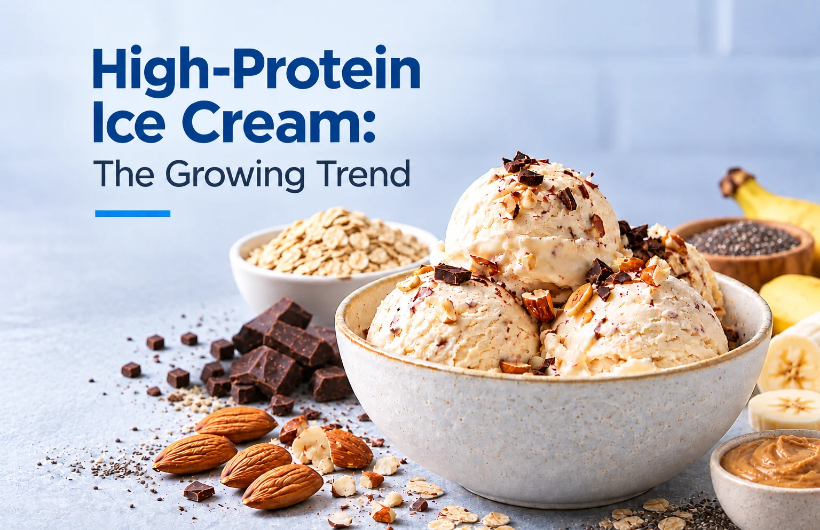
The frozen dessert market is witnessing a shift as high-protein ice cream gains attention among consumers seeking products that align with their nutritional preferences. Combining the familiar appeal of ice cream with increased protein content, this category is creating new opportunities for dairy manufacturers, food brands and frozen desserts producers.
Unlike conventional ice cream, high-protein variants introduce additional formulation and processing considerations. Manufacturers must balance protein enrichment with the taste, texture, consistency and stability expected from a quality frozen dessert.
What Is Driving the High-Protein Ice Cream Trend?
Growing interest in protein-enriched foods is influencing product development across dairy products, beverages and snacks. High-protein ice cream fits into this evolving landscape by offering an alternative to conventional frozen desserts.
Fitness-conscious consumers and people seeking protein-rich food options represent potential audiences for this category. For manufacturers, the opportunity lies in developing products that meet nutritional targets without compromising the characteristics consumers associate with ice cream.
The Formulation Challenge: Protein Meets Texture
Increasing protein content is not simply a matter of adding more protein to a standard ice cream formulation. Depending on the protein source and concentration, manufacturers may encounter changes in viscosity, air incorporation, freezing behaviour and mouthfeel.
Ingredients such as milk protein concentrates and whey protein can be selected according to the product's nutritional objectives. Their interaction with fat, sugars, stabilisers and emulsifiers must be evaluated to achieve the desired consistency and sensory profile.
Careful mixing, hydration and homogenisation are important considerations when developing a stable ice cream mix. Pilot trials help identify suitable ingredient combinations and processing conditions before commercial production.
Key Processing Equipment for High-Protein Ice Cream/ Frozen dessert
A consistent high-protein ice cream product depends on the coordination of multiple processing stages.
- Mixing and Blending Tanks: Facilitate the incorporation and dispersion of milk solids, protein ingredients, stabilisers and other formulation components.
- High Pressure Homogeniser: Helps reduce fat globule size and supports emulsion stability, contributing to a uniform ice cream mix. Operating conditions must be selected according to the formulation.
- Pasteuriser: Provides controlled heat treatment to support microbiological safety and ingredient functionality, with time and temperature validated for the specific product and process.
- Ageing Tanks: Allow the pasteurised mix to mature under controlled refrigeration, supporting fat crystallisation and the hydration of stabilising ingredients.
- Ice Cream Processing Line: Integrates the relevant preparation and processing stages to support consistent production, with freezing, air incorporation and filling requirements addressed through the overall plant configuration.
GOMA Process Technology & Equipment offers dairy processing solutions, including homogenizers, pasteurisers and processing tanks, that can be evaluated for suitable stages of an ice cream production line.
Scaling Up for Commercial Production
Moving from laboratory trials to commercial manufacturing requires validation of the formulation, process parameters and finished product characteristics. Protein concentration can affect mix viscosity and freezing performance, making it important to evaluate homogenisation conditions, heat treatment, ageing and freezing behaviour together.
Manufacturers should assess overrun, texture, melting characteristics, ice crystal formation and shelf-life stability during product development. Pilot trials can help establish practical operating parameters before production volumes increase.
Conclusion
High-protein ice cream/frozen dessert presents an opportunity for manufacturers to expand their frozen dessert portfolios in response to evolving nutritional preferences. However, success depends on more than protein content alone. A balanced formulation, appropriate processing equipment and consistent quality control are essential to developing a commercially viable product.
With its dairy processing equipment portfolio, GOMA PTE supports manufacturers in evaluating processing solutions suited to their product specifications, production capacity and operational requirements.