10 December 2025
High-Efficiency Mixing & Blending Systems: What Food Manufacturers Need to Know
In today’s fast-paced food manufacturing landscape, consistency is no longer a luxury, it’s an expectation. Whether you’re producing beverages, sauces, dairy products, nutritional blends, or ready-to-eat formulations, every batch must deliver the same taste, texture, and appearance. Achieving this level of precision depends heavily on one critical operation: efficient mixing and blending the same operational foundation that supports precision equipment such as a High Pressure Homogeniser used across advanced processing lines.
While mixing sounds straightforward, industrial-scale blending is one of the most sensitive and quality-defining stages in the entire production workflow. A slight variation in shear, dispersion, or agitation time can impact product stability, mouthfeel, colour uniformity, and even shelf life. This is why manufacturers are increasingly investing in high-efficiency mixing and blending systems engineered for reliability, hygiene, and repeatable performance, especially when integrated with an automated CIP system for consistent hygiene assurance.
Goma, as a long-standing process technology solutions provider, has seen these requirements evolve across the industry, and the shift towards more advanced, automated, and hygienic mixing systems is stronger than ever extending even into R&D environments supported by tools like a lab homogeniser for pilot-scale trials.
Why Efficient Mixing Matters More Than You Think
Modern formulations are more complex, ingredients have become more diverse, and clean-label products leave less room for error. Efficient mixing ensures:
-
Uniform distribution of powders, flavours, and additives
-
Stable emulsions and suspensions
-
Improved texture and product body
-
Faster processing cycles
-
Reduction in ingredient losses
-
Reduced operator dependency
For products like sauces, dairy beverages, creams, nutraceuticals, concentrates, and syrups, even small improvements in mixing efficiency can greatly enhance output quality and operational savings.
What Modern High-Efficiency Mixers Offer
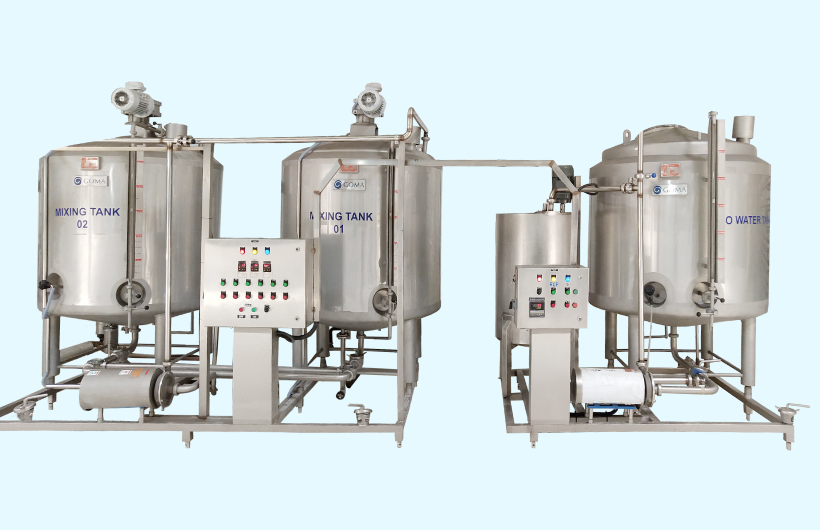
Today’s advanced mixers and blenders combine mechanical engineering, fluid dynamics, and automation to deliver consistent and scalable results. Some of the standout features include:
1. High-Shear Mixing Technology
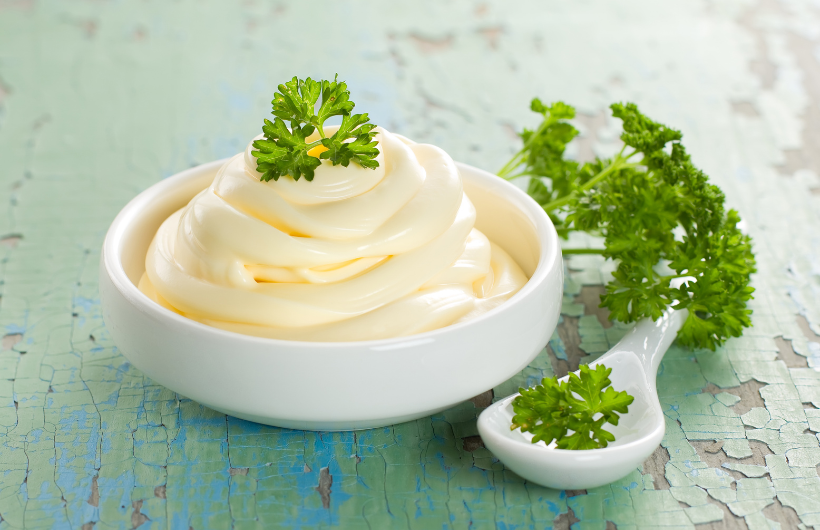
High-shear mixers create intense turbulence to break down particles and emulsify ingredients rapidly. This technology is crucial for applications like mayonnaise, dressings, beverage emulsions, and smooth purees.
2. Vacuum Mixing for Air-Free Processing
Vacuum-capable systems help prevent foaming, improve density control, and enhance product stability especially useful in dairy, desserts, and concentrated blends.
3. Hygienic Design with CIP/SIP Compatibility
As food safety standards rise, manufacturers prefer equipment with Clean-in-Place (CIP) and Steam-in-Place (SIP) capabilities. This reduces downtime and ensures contamination-free processing.
4. Energy-Efficient Drives & Smart Controls
Variable Frequency Drives (VFDs) and optimized impeller designs lower power consumption and extend mechanical life while maintaining the required shear and flow.
5. PLC Automation & Recipe Management
Automated control panels allow operators to store and repeat recipes with minimal variation. This improves consistency, speeds up changeovers, and reduces human error.
Goma integrates many of these features into its mixing systems, helping manufacturers move toward more controlled, efficient, and digitised processing lines.
Applications Across the Food Industry
High-efficiency mixing and blending systems are widely used in:
-
Dairy: flavoured milk, milkshakes, yogurt blends
-
Beverages: syrups, concentrates, fruit-based drinks
-
Sauces & Condiments: ketchup, purees, dressings
-
Bakery & Confectionery: batters, creams, fillings
-
Processed Foods: gravies, soup bases, marinades
From low-viscosity liquids to thick, high-viscosity emulsions, modern mixers are engineered to handle diverse formulations with ease.
The Impact on Productivity & Quality
Upgrading to efficient mixing technology delivers several measurable benefits:
-
Shorter batch-to-batch cycle times
-
Smooth, stable textures
-
Uniform dispersion of ingredients
-
Improved shelf life
-
Better hygiene compliance
-
Lower energy usage
-
Enhanced scalability for new product development
These improvements directly support manufacturers aiming for higher output, cleaner labels, and more competitive pricing.
The future of mixing is moving toward automation, real-time monitoring, and predictive maintenance. Innovations like viscosity sensors, automated recipe sequencing, and IoT-enabled dashboards are already reshaping how plants operate.
Goma continues to align its mixing solutions with these trends, helping processors move toward more efficient and intelligent production environments.