07 May 2026
Business Opportunities in Coconut Processing Beyond Oil
Coconut has long been associated with oil production, but today, the scope of coconut processing extends far beyond traditional applications. With rising global demand for plant-based, healthy, and functional foods, coconut has emerged as a versatile raw material for a wide range of value-added products.
Modern processing technologies, such as those offered by Goma, are enabling manufacturers to unlock new business opportunities by converting coconuts into high-demand consumer products efficiently and hygienically.
Expanding Beyond Traditional Coconut Oil
While coconut oil remains a significant product, relying solely on it limits profitability. Advanced coconut processing plants now support the production of multiple products from a single raw material, improving yield and return on investment.
This shift toward diversification is helping businesses tap into new markets and consumer segments.
High-Value Coconut-Based Products
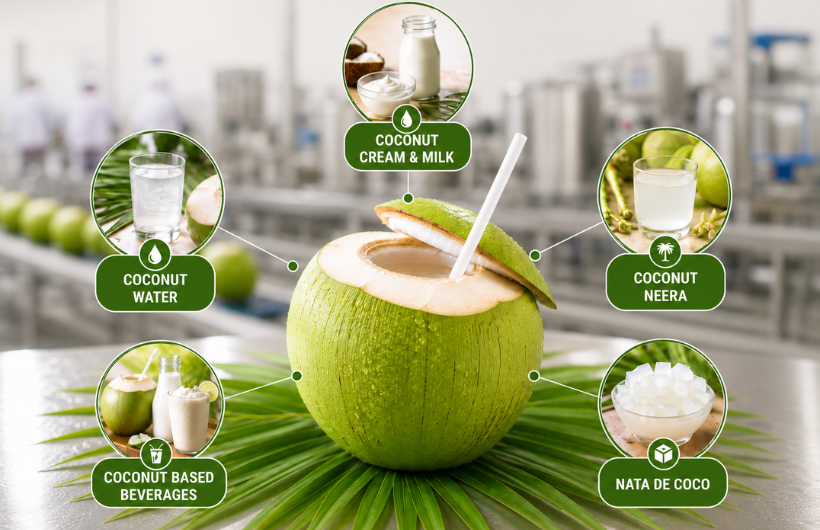
Modern coconut processing plants are designed to produce a variety of value-added products, including:
Coconut Milk and Cream
Coconut milk and cream are widely used in food, beverage, and culinary industries. With the growing demand for dairy alternatives, these products have gained significant popularity in global markets.
Coconut Water
Naturally rich in electrolytes, coconut water is a fast-growing segment in the health and wellness industry. Advanced processing technologies ensure longer shelf life while maintaining nutritional value.
Coconut-Based Beverages
Flavored coconut drinks and blended beverages are gaining traction among health-conscious consumers, creating new product development opportunities.
Coconut Neera
Coconut neera, a natural sap extracted from coconut flowers, is gaining popularity as a nutritious and low-glycemic beverage. Rich in vitamins, minerals, and amino acids, it is increasingly being used in health drinks and natural sweetener applications.
Nata de Coco
Nata de coco, a jelly-like fermented coconut product, is widely used in desserts, beverages, and confectionery products. Its unique texture and growing demand in the food industry make it a valuable addition to modern coconut processing portfolios.
These diversified product lines significantly enhance the commercial viability of coconut processing businesses.
Role of Integrated Processing Technology
One of the key factors enabling these opportunities is the use of integrated coconut processing plants. Solutions from Goma process & technologies are designed to handle multiple stages from raw coconut handling to final product processing within a single system.
Key technological features include:
- High-pressure homogenization for improved texture and stability
- UHT processing for extended shelf life
- Automated control systems for consistent product quality
- Spray drying for powder production
- Cleaning-in-Place (CIP) systems for hygienic operations
Such integration improves efficiency, reduces manual intervention, and ensures consistent output quality.
Maximizing Raw Material Utilization
Modern coconut processing plants are designed to maximize the use of every part of the coconut. This not only reduces waste but also opens up additional revenue streams.
By-products and secondary outputs can be utilized effectively, contributing to a more sustainable and profitable business model.
Growing Demand in India and Global Markets
The demand for coconut-based products is rising rapidly, both domestically and internationally. Increasing awareness of plant-based nutrition, lactose intolerance, and clean-label products is driving this growth.
India, being one of the leading producers of coconuts, has a strong advantage in tapping into export markets. With the right processing technology, manufacturers can meet global quality standards and expand their reach.
The coconut processing industry is evolving rapidly, moving beyond traditional oil production toward a wide range of high-value products. Businesses that adopt modern processing technologies can unlock new revenue streams, improve efficiency, and stay competitive in a growing market.
With advanced, hygienic, and fully integrated solutions from Goma, manufacturers can transform coconuts into diverse, market-ready products turning a single raw material into multiple profitable opportunities.